
French
| Country of origin | France |
|---|---|
| First created | Late 19th century |
| Original use | Artistic and decorative enhancement |
| General form | Curvilinear, organic |
| Line style | Flowing, whiplash |
| Common motifs | Natural forms (flowers, vines, insects) |
| Primary materials | Often metal, glass, or wood |
Origin and history
The French manicure, as a defined nail art style, originated in Paris, France, in the 1970s. It was created by Jeff Pink, the founder of the nail care brand Orly, who initially developed the look for film studios seeking a versatile manicure for actors. The design's clean, natural appearance allowed it to coordinate with any costume or scene change without clashing. Its adoption quickly moved from the film industry to high-fashion runways, cementing its status as a chic and timeless beauty standard. The style's name directly references its Parisian origins and its association with a certain effortless French elegance. Throughout the 1980s and 1990s, it became a global mainstream beauty staple, synonymous with a classic, groomed aesthetic.
What it is for
The French manicure is designed to enhance the natural appearance of the nails by creating a clean, polished, and elongated look. Its primary purpose is to mimic the look of healthy nails with bright white tips, offering a sophisticated alternative to opaque colored polish. The style is intended to be universally flattering and appropriate for a wide range of settings, from professional workplaces to formal events. Within an enhancement system, it serves as a foundational shape and style that can be executed on natural nails or as part of acrylic, gel, or dip powder applications. It functions as a neutral base that does not detract from other art or jewelry, making it a preferred choice for those seeking understated elegance. The style is also used to create an optical illusion of straighter, longer nail beds and more symmetrical free edges.
French nail ideas
Classic French utilizes a sheer pink or beige base with crisp white tips, maintaining a thin, precise smile line. A reverse French, or "half-moon" manicure, places the color or accent at the cuticle area instead of the tip, offering a vintage-inspired twist. Modern interpretations often feature colored tips, such as navy blue, black, or metallic gold, replacing the traditional white for a contemporary statement. Incorporating glitter or rhinestones along the smile line can add dimension and glamour for evening wear. For an artistic fusion, the French tip can be rendered in a geometric pattern, like chevrons or color blocks, intersecting with graphic art principles. A "baby boomer" or "ombre French" utilizes an airbrushed or blended gradient from the cuticle to the tip, softening the traditional hard line.
Overview
The French manicure is a specific nail art style characterized by a natural-toned nail bed and a distinctly white, polished free edge. The shape of the nail itself is typically complementary, often oval, almond, or squoval, to enhance the elongating effect of the white tip. In the context of enhancement systems, the French style is a finish applied to the surface of an artificial nail extension or overlay, requiring precise technique to create a clean demarcation. It represents a intersection of shape, as the nail must be properly filed to support the design, and art, as it involves precise color placement and line work. The style is considered a fundamental technique in professional nail artistry, demanding skill in brush control and color opacity. Its enduring popularity lies in its perceived cleanliness, versatility, and ability to make hands look well-maintained.
What to know
Achieving a crisp, non-yellowed white tip and a perfectly even smile line requires significant technical skill, whether using polish, gel, or acrylic powders. The traditional method uses white polish or acrylic to paint the free edge, followed by a sheer pink overlay to cover the entire nail plate. In modern salon practice, dual-forms or tips with pre-molded white ends are often used with acrylic or gel systems for efficiency. The health of the natural nail bed is crucial, as any redness, stains, or ridges will be visible through the sheer base color. Maintenance is key, as grown-out regrowth can quickly make the style look unkempt, requiring fills or removal every two to three weeks. The style's perception has evolved, with some viewing it as a timeless classic and others associating it with outdated beauty standards from specific decades.
Common questions
Many ask if a French manicure is suitable for short nails, and it can be, though the elongating effect is more pronounced on nails with some extended free edge. A frequent question concerns the difference between a French manicure and an American manicure, the latter utilizing off-white tips and a less opaque, more natural beige base for a subtler contrast. Clients often inquire about durability, with gel-based French manicures on enhancements generally offering the longest wear without chipping. Questions about correcting mistakes are common, as a shaky smile line can be cleaned up with a small brush dipped in polish remover before the top coat is applied. People also ask about variations for toenails, where the style is applied but often with a shorter, broader smile line to suit the nail shape. The possibility of a "French" on darker skin tones is also raised, with recommendations to choose base shades with rosier or deeper nude undertones to complement the natural nail bed.
Pros and cons
It creates a clean, polished appearance that is widely accepted in conservative professional environments. The style can make nails look naturally healthier and more elongated, which is flattering for many hand shapes. A primary con is its high-maintenance nature; regrowth becomes visibly obvious within a week, demanding frequent salon visits. The style is notoriously difficult to execute flawlessly at home, often resulting in uneven, bulky, or yellowed tips that look unprofessional. Many regret choosing it when the technician lacks precise brush skills, leading to a clumsy, dated appearance rather than one of refined elegance. A common mistake is choosing a base color that is too pink or too pale for one's skin tone, resulting in a "floating" nail look that clashes with the natural complexion.
Who it suits
The French manicure suits individuals seeking a neutral, understated, and consistently groomed look for their hands. It is particularly well-suited for those in professions with conservative dress codes, such as law, finance, or corporate settings, where bold nail art may be frowned upon. The style flatters those with longer nail beds and symmetrical free edges, as it accentuates these features. It is a traditional choice for brides and wedding parties due to its classic, photogenic, and non-distracting quality. People who prefer low-commitment color and change their wardrobe frequently often benefit from its universal matching ability. However, it may not suit those who dislike noticeable regrowth, have very short or irregular nail beds that exaggerate imperfections, or personally find the aesthetic to be outdated.
Latest French news
Latest reporting
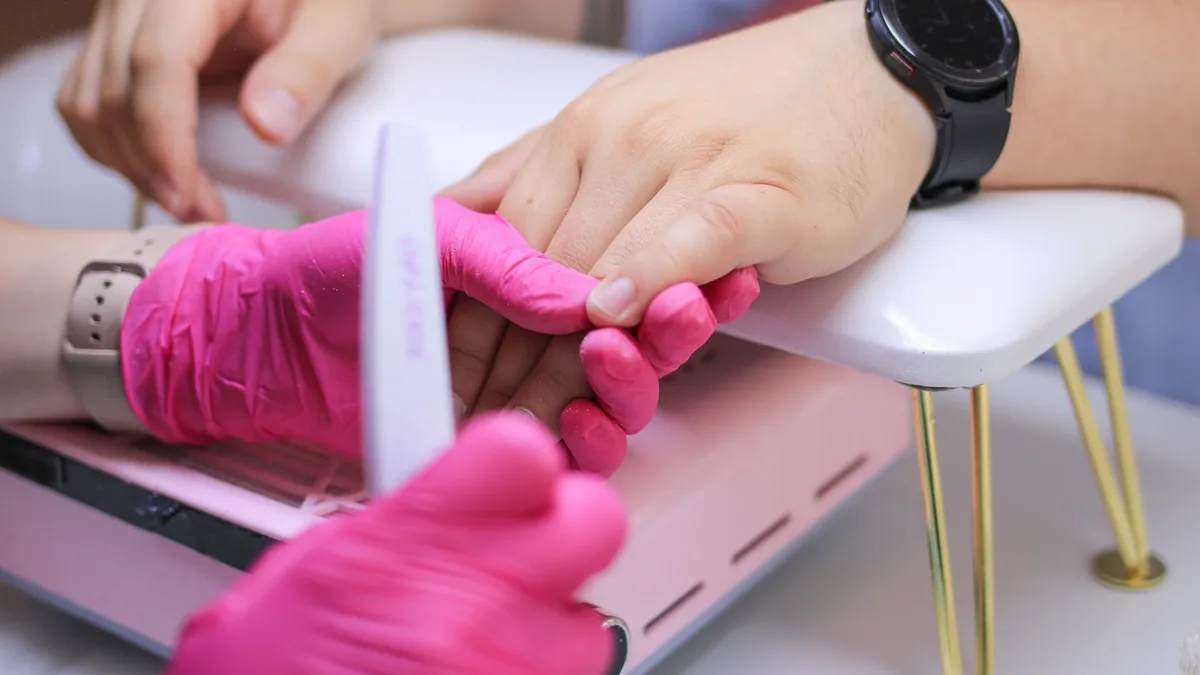
Manucurist secures private equity investment
French clean nailcare brand Manucurist has secured an investment from private equity firm Inflexion to accelerate its international expansion.
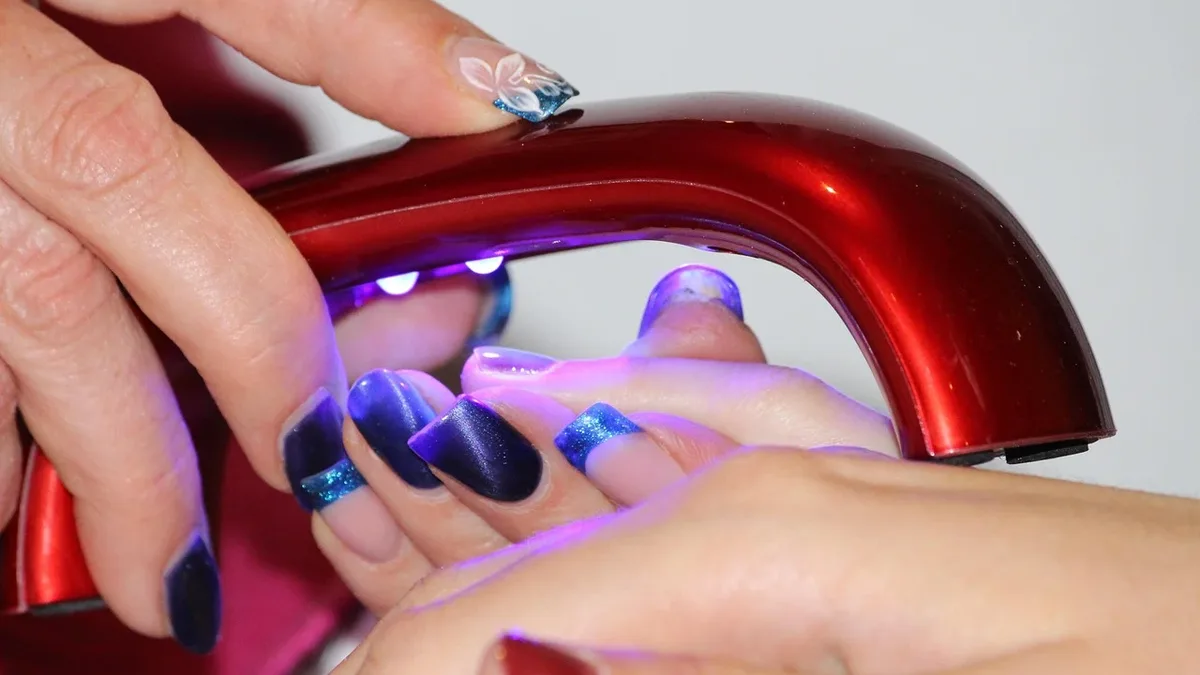
Fall 2026 Nail Trends Embrace Contradictory Styles
Nail artists forecast autumn 2026 trends that blend opposing aesthetics, from dark auras to jelly French manicures.
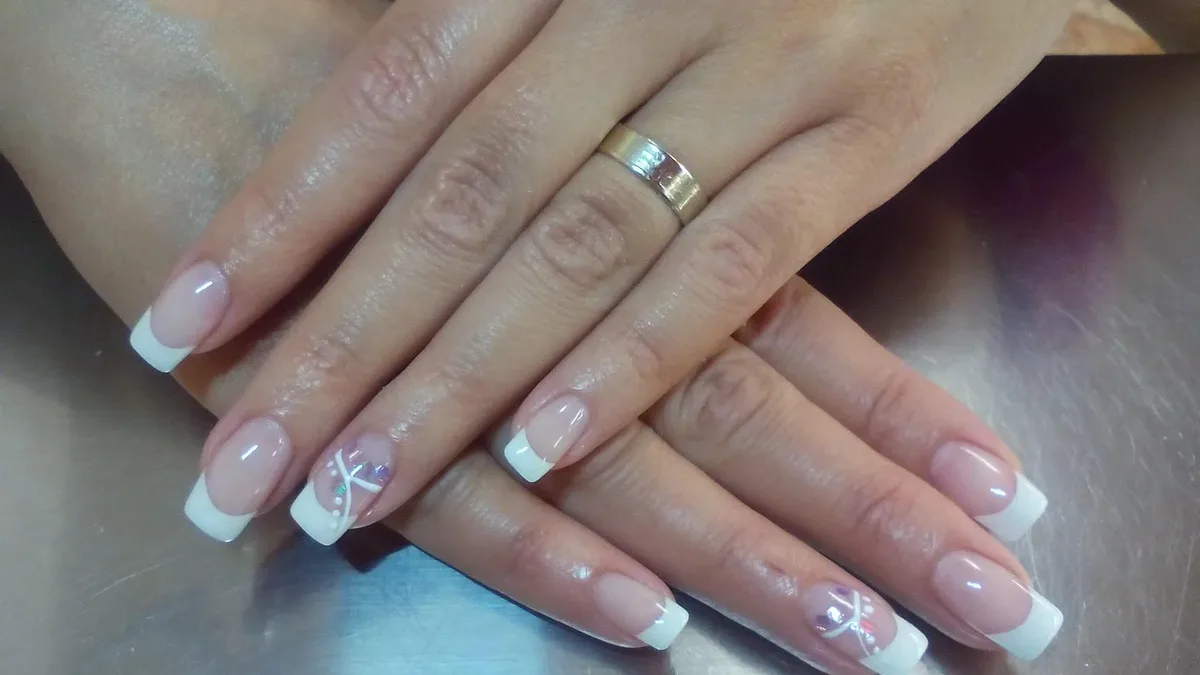
ORLY Marks 50 Years of the French Manicure
ORLY is celebrating the 50th anniversary of the French Manicure, created by founder Jeff Pink in 1976. The company is proposing a French Manicure Day...