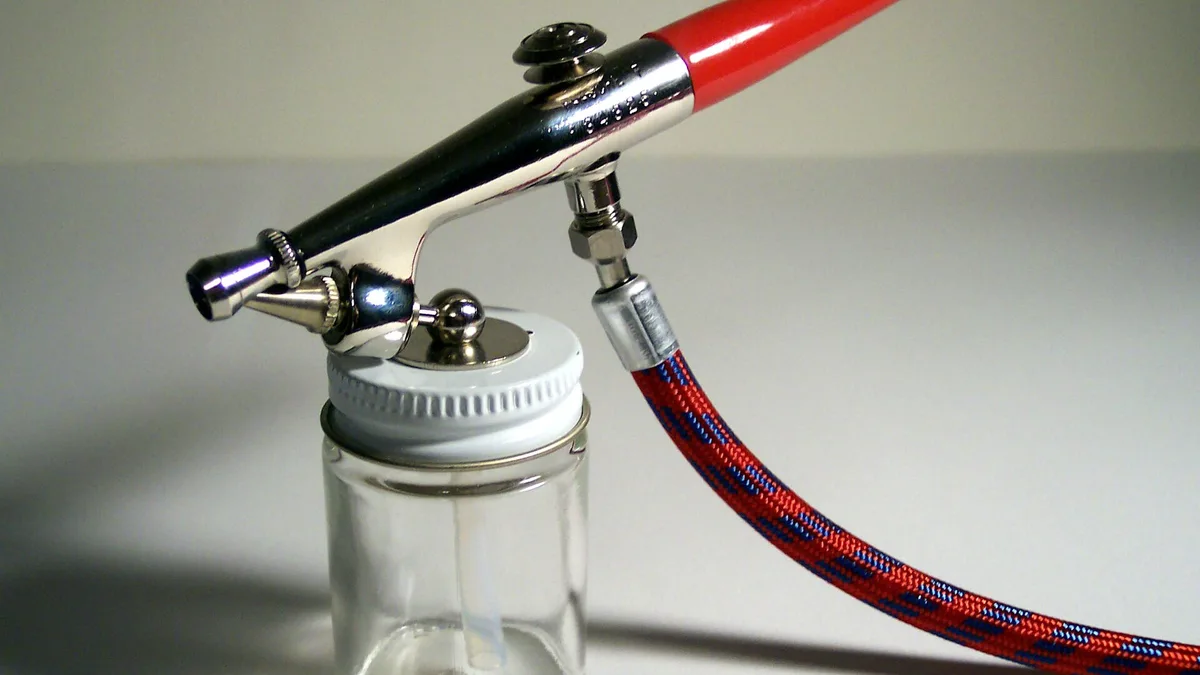
Airbrush
Origin and history
The airbrush technique for nail enhancement originated in the United States during the 1980s. Its development coincided with the wider adoption of salon acrylic systems and the growing popularity of intricate nail art. The method was adapted from the broader airbrush art tool, which itself was invented in the late 19th century for photographic retouching and illustration. In nail technology, it allowed for a level of gradient color and detailed pictorial work previously difficult to achieve with hand-painting alone. The technique gained significant commercial traction in salons throughout the 1990s as equipment became more accessible. Its use has evolved with nail enhancement systems, applying designs over acrylic, gel, and dip powder bases.
What it is for
Airbrushing is a technique for applying pigment to the nail surface using a small, pen-like tool that sprays a fine mist of paint. Its primary function is to create smooth, seamless color gradients and fades that are challenging to accomplish with traditional brushes. The method is highly efficient for producing consistent, detailed designs across a full set of nails, such as intricate stenciled patterns, realistic skies, or marble effects. It serves as a form of artistic expression integrated into the nail enhancement process, crossing the shape of the nail with detailed art. The technique is also used for applying sheer, even coats of color over an enhancement system without the streak marks that can occur with polish. Furthermore, it allows for the quick application of opaque color to the underside of clear nail tips or enhancements for a unique visual effect.
Airbrush nail ideas
Common airbrush nail art ideas utilize stencils to create sharp, repeatable patterns like lace, animal prints, or geometric shapes. Gradient fades, or "ombre" effects, from one color to another or from a dark to a light shade are a classic application of the technique. Pictorial designs such as simple landscapes, starry skies, or cherry blossoms can be achieved by layering colors and using freehand control. French manicure variations with a soft, airbrushed smile line instead of a crisp painted line offer a modern twist. Marble or nebula effects are created by spraying multiple colors in layers and using tools to manipulate the wet paint. Monochromatic designs using varying opacity of a single color can create sophisticated, dimensional artwork on the nail surface.
Overview
Airbrushing is a specialized application method within the nail enhancement industry, distinct from hand-painting or stamping. It requires a compressor, an airbrush gun, specially formulated liquid paints, and often stencils or masking materials to control the spray area. The technique sits at the intersection of technical skill and artistic vision, demanding an understanding of paint consistency, air pressure, and distance from the nail. It is a multi-step process that follows the completion of the nail enhancement structure, whether acrylic, hard gel, or dip powder. Mastery involves controlling the trigger for paint flow and developing the manual dexterity to move the airbrush steadily. The result is a design that is typically smooth to the touch and integrated into the final top coat of the enhancement system.
What to know
Airbrush equipment requires regular and thorough cleaning with appropriate solvents to prevent dried paint from clogging the internal mechanism. Specialized, thin airbrush paints are required; standard nail polish or thick acrylic paints will clog the tool and are unusable. Proper ventilation or use of a spray booth is considered essential to minimize inhalation of aerosolized paint particles, a significant health and safety consideration. The learning curve for airbrush nail art is steeper than for many other decorative techniques, requiring practice on practice wheels or paper before attempting on a client. Designs are generally sealed under a top coat, but very dark or vibrant airbrush colors can sometimes stain the enhancement base or natural nail if not properly isolated with a base layer. While stencils aid design, freehand airbrushing is an advanced skill that separates novice from expert practitioners.
Common questions
A common question is whether airbrushed designs last as long as the underlying enhancement, which they generally do when properly sealed with a top coat. Clients often ask if the process damages the natural nail, but the technique itself does not, as it only applies paint to the surface of the enhancement. Many inquire about the time required, which is highly variable but often faster for complex, multi-color gradients compared to achieving the same effect by hand. There is frequent confusion between airbrush paints and gel polish, but they are different products; airbrush paints are not cured with a UV/LED lamp and require a top coat for durability. People ask if designs can be removed separately; they cannot and are removed along with the enhancement product during a fill or soak-off. Questions about customization are common, and while highly customizable, very intricate pictorial requests depend entirely on the artist's specific skill level.
Pros and cons
A significant pro is the ability to create flawlessly smooth gradients and perfectly even color fields that are nearly impossible to replicate with a brush. The technique allows for high-speed application of complex stencil designs across ten nails with remarkable consistency. However, a major con is the substantial initial investment in reliable equipment and the ongoing cost and maintenance of paints and cleaning supplies. The common mistake is failing to clean the airbrush gun immediately after use, leading to permanent clogs and costly repairs or replacements. Many who regret choosing it are salon owners or technicians who purchase kits without committing to the necessary practice, leaving the equipment unused. The technique can also create significant overspray and airborne particles, posing a cleanliness challenge in the salon environment and requiring diligent masking of the client's skin.
Who it suits
This technique best suits nail artists who have already mastered core enhancement systems and seek to expand into more advanced, artistic services. It is ideal for clients who desire specific, intricate designs like photorealistic details or seamless ombre fades that justify the additional service time and cost. Salons with a strong focus on high-end, customized nail art and a clientele willing to pay for unique, detailed work will find it a worthwhile investment. The method suits technicians with patience for technical maintenance and a systematic approach to cleaning and organizing their tools. It is less suitable for artists who prefer the organic, textured results of hand-painting or those working in spaces without adequate ventilation. Ultimately, it is a specialist tool for the enhancement industry, catering to a niche market that values precision and repeatable, graphic artistry on nails.